![UK Argo [logo]](/themes/ukargo-NOC8X/logo.svg)
Argo missions - One Argo
More than 90% of all global warming heat is stored in the oceans, so Argo’s direct measurements of ocean temperature were crucial for Working Group 1 of the IPCC to use for the first time in 2021 the word unequivocal in key finding A.1 of the 6th Assessment Report: “It is unequivocal that human influence has warmed the atmosphere, ocean and land. Widespread and rapid changes in the atmosphere, ocean, cryosphere and biosphere have occurred”.
For global and regional ocean forecasting, and for coupled numerical weather prediction on timescales from days to seasons, Argo is the most important source of in situ ocean data. Argo data ensure forecasts start from the best possible description of the initial state of the ocean, which is critical for providing the most accurate forecasts for defence, industry and the public.
Scientific demand and technological advances mean that Argo can now be expanded to include the full-depth ocean, and a range of biogeochemical variables in diverse ocean regions.
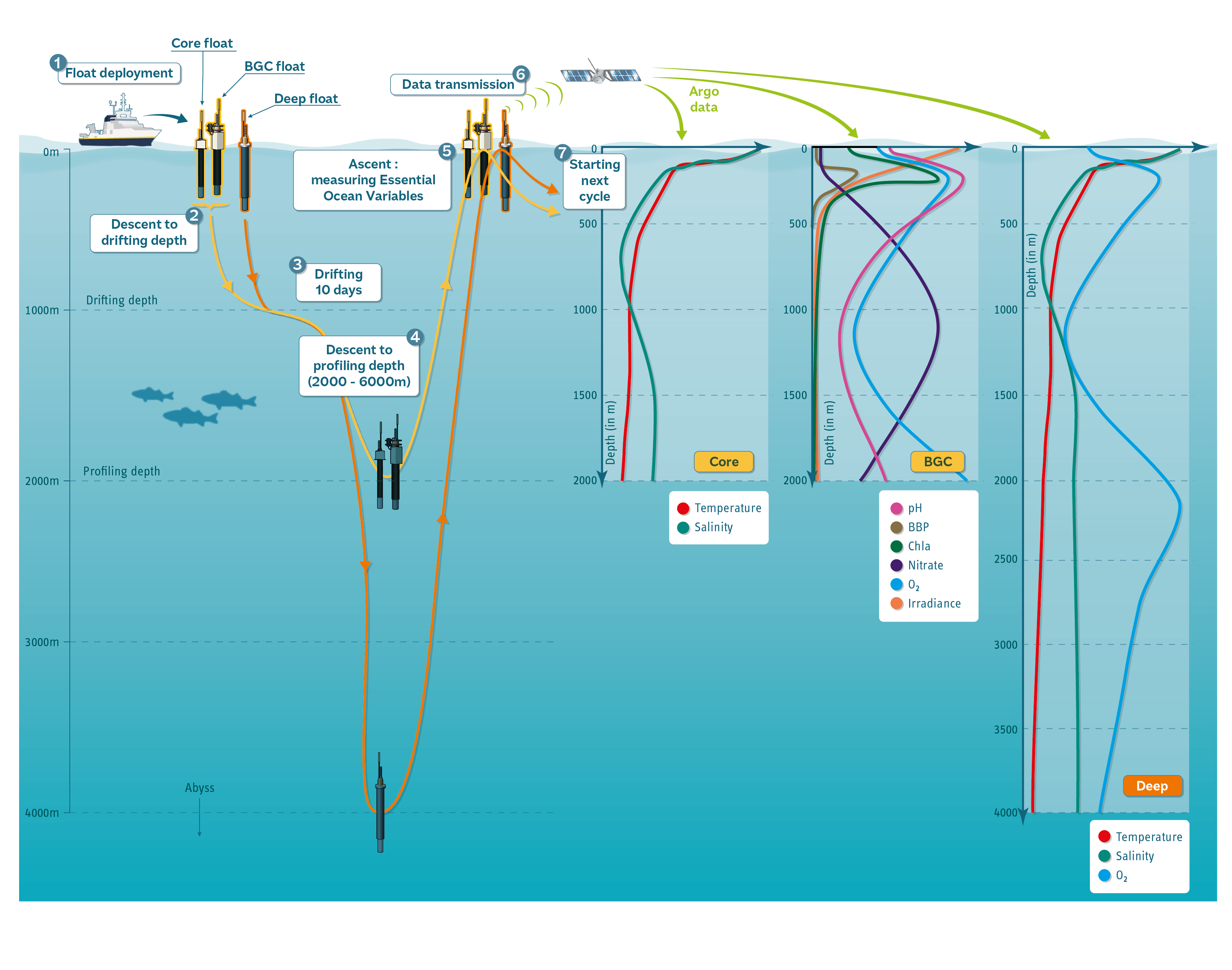
OneArgo brings together different types of Argo missions to create a comprehensive, global observing system for the ocean.
- Core Argo floats measure temperature, salinity and pressure, providing essential information on ocean structure, circulation and climate.
- Deep Argo extends observations into the deep ocean, with floats capable of profiling to around 6,000 metres,
- Biogeochemical (BGC) Argo floats carry additional sensors to observe properties such as dissolved oxygen, nitrate, pH, chlorophyll and particles.
- Polar Argo Mission: floats that measure temperature, salinity, and pressure down to 2000m in the polar regions. Polar Argo refers to the subset of Argo floats operating in ice-covered areas south of 60°S and north of 60°N
Together, these missions provide complementary observations from the surface to the deep ocean and from physical conditions to marine biogeochemistry. Each float operates autonomously according to its mission configuration, repeatedly profiling through the water column, transmitting observations when it reaches the surface and then beginning its next cycle.

High-latitude extension
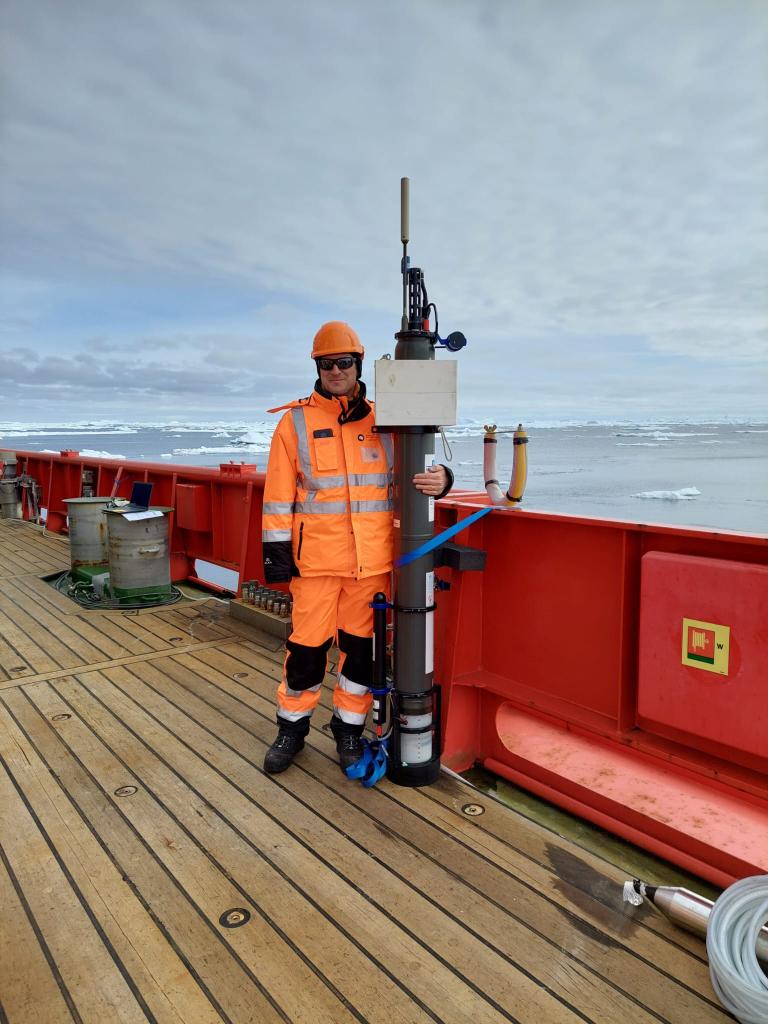
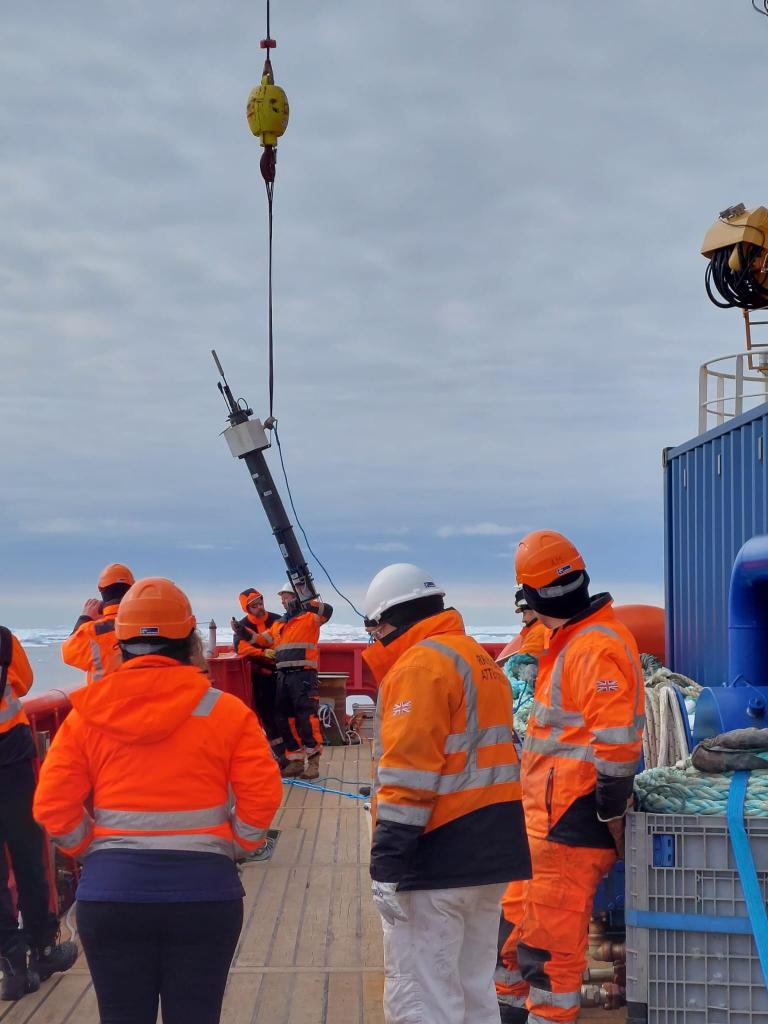
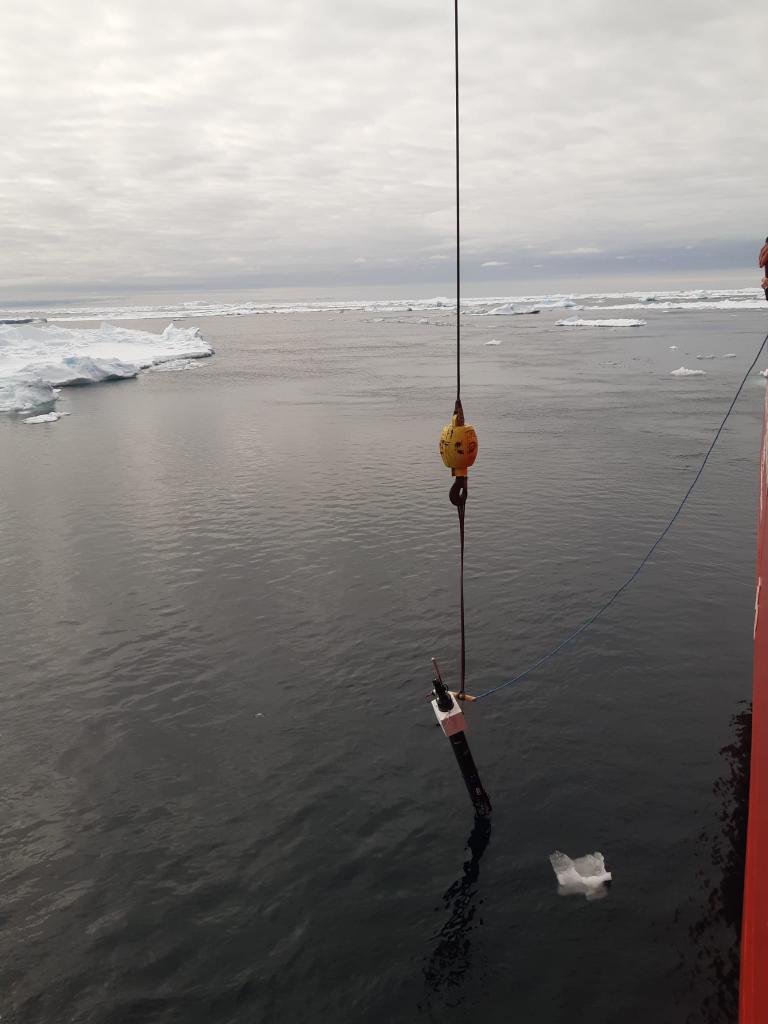
Float deployment in the Southern Ocean using the new, technologically advanced Argo PROVOR-V float.